Happy birthday kiate au

birthday-109963_640

One year ago I created this blog as a resource for parents, educators and anyone wanting to learn this beautiful language of ours. My focus was on creating fun experiences for my 4 children, and in that time my children have blossomed. Never did I imagine that one year later I would be putting those personal experiences to the test at my very own Manulua Tongan playgroup. 

This is a Tongan saying and is only fitting for my gratitude for this experience, and the wonderful people I have met along the way. “Koe koloa’ ‘a Tonga ko e fakamalo” – Our thanks is the only treasure we have to give in return.

Ko e me’a pe te u lava ke fakamalo  ki he ‘Eiki mafimafi’. I only thing I can do is to give thanks to the Almighty Lord.

Hema xo

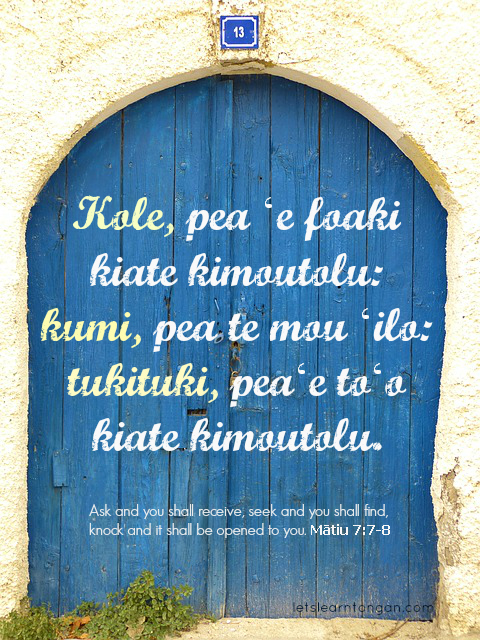
Tongan bible verse: Mātiu 7:7-8

Matthew 7:7
Matthew 7:7

A great tip to learning Tongan is comparing bible passages in English & Tongan. Kids learn Tongan by reciting bible verses and hymns durnig Faka-Mē or White Sunday in May which is a great way to pick up vocabulary. Here is a visual of a well known bible passage Matthew 7:7-8. Simply compare the verse and recite by heart and you will add to your vocabulary. For more Tongan bible passages share and let me know you like them. 

  • Kole = Ask
  • Kumi = Seek/ find
  • Tukituki = Knock

Tongan kisses for the new year

Ko e hā ʻa e ʻuma faka-Tonga pea ʻoku ai fēfē? Ko e ʻuma faka-Tonga ʻoku tatau mo e ʻuma fakananamuʼ, ʻoku faingofua pe ʻene ai ka ko e ngaahi meʻa eni ke manatuʻi. 

  1. milimili kilimi ke namu lelei ʻa e mata kihe taimi fakafeiloaki
  2. ʻumaʻaki ʻa e kouʻaheʼ
  3. pea mihi pē ki ha taha ʻoku ke vaʻofi ʻaupito mo ia

What is a Tongan kiss and how is it done? It is also known as the sniff kiss, it is quite easy to do but you must remember several things.

  1. put on some lotion to smell nice when you greet others
  2. kiss using the cheeks
  3. then sniff only with someone who you are close with

Most of us are quite familiar with the Tongan kiss by the way our parents, grandparents and elderly greeted us. We Tongans use it as a sign of affection. While I may have once thought it an awkward greeting in my teenage years I now embrace it fully and greet my children no other way. Its origins must be ancient going back to our South-East Asian roots, as they also greet this way. It is also similar to the Māori greeting known as Hongi. While they greet using nose to nose, we Tongans use cheek-to-cheek. The significance of the sniff to the Māori people is that it symbolises the breath of life, breathing in the mana of the person you are greeting. Knowing all this, gives you a whole new perspective on the ʻuma faka-Tonga.

Tips in sharing the tradition of Tongan kisses with your children:

My children use to run away every time their grandma said it was milimili kilimi time. Since Iʼve explained to them the following tips they quite like receiving kisses in the Tongan manner.

  1. milimili kilimi is for smelling nice when you greet people.
  2. ʻuma faka-Tonga is how Tongans show affection
  3. mihi is how we really show affection for the people we love.
  4. mihi/ hongi is the breath of life
  5. When someone like grandma sniffs it is their way of sharing their mana and well wishes with you

The limits of my Tongan language

The limits of my language

The goal for my blog in 2014 is to make learning the Tongan language easy, fun and shareable for you all in this digital age. Like climbing a coconut tree the view is better from the top but we can only share as much as we know. The limits of my language (ie my understanding of the Tongan language and culture) is the truly the limits of our own world. For parents who are fluent in Tongan please do not limit the view of your children. For those trying to improve, join in the conversation via our socail media page and let us broaden our horizon’s together.

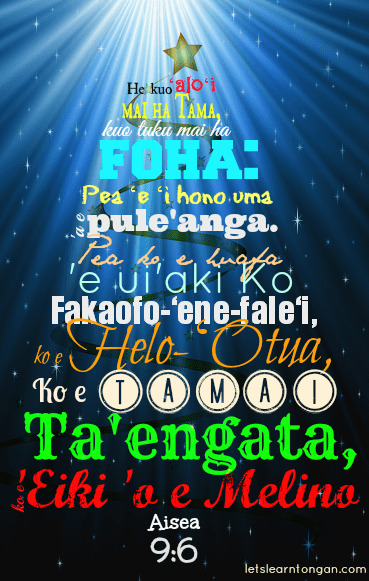
Prince of Peace: Aisea 9:6

Aisea 9:6

A beautiful passage in the bible, reminding us the reason for the season.

Isaiah: 9:6 For there has been a child born to us, there has been a son given to us; and the princely rule will come to be upon his shoulder. And his name will be called Wonderful counselor, Mighty God, Eternal Father, Prince of Peace.

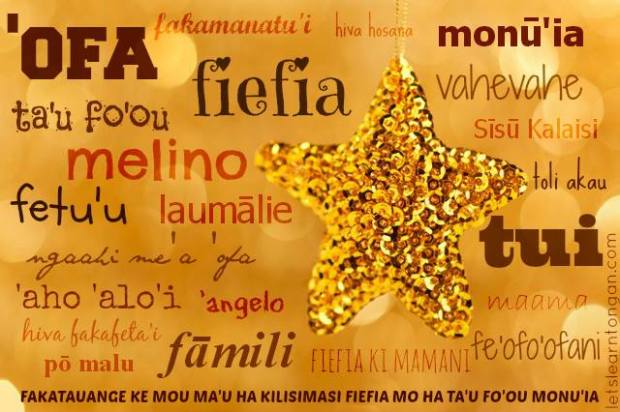
Talamonū: Tongan Christmas Greetings

Talamonū: Christmas Greetings

‘Oku ‘oatu ‘ae popoaki talamonū faka kilisimasi ko eni kiate kimoutolu kotoa pe ʻi he tapa ʻo e koloape. ‘Ofa ke mou ma’u ha Kilisimasi fiefia mo faka’ofo’ofa ‘o hangē ko ho’omou feitu’u faka’ofo’ofa pea tauange ke tau ‘inasi ‘i he fiefia tatau ʻi hono fakamanatua ‘o e ‘aho ‘Alo’i.

‘Ofa lahi atu meiate au Hema Fifita mo ʻeku siʻi famili masiva

Mamalu e pō – Oh holy night

Kuo lele mai e mafana he fanongo ki he le’o ko ‘eni. Fakatauange te mou ma’u ha kilisimasi fiefia.

My favourite Christmas song has to be Oh Holy Night and here is the Tongan version. I am definitely feeling the spirit of Christmas. Wishing you all a safe happy holidays.

End of year presentation: speak Tongan at home


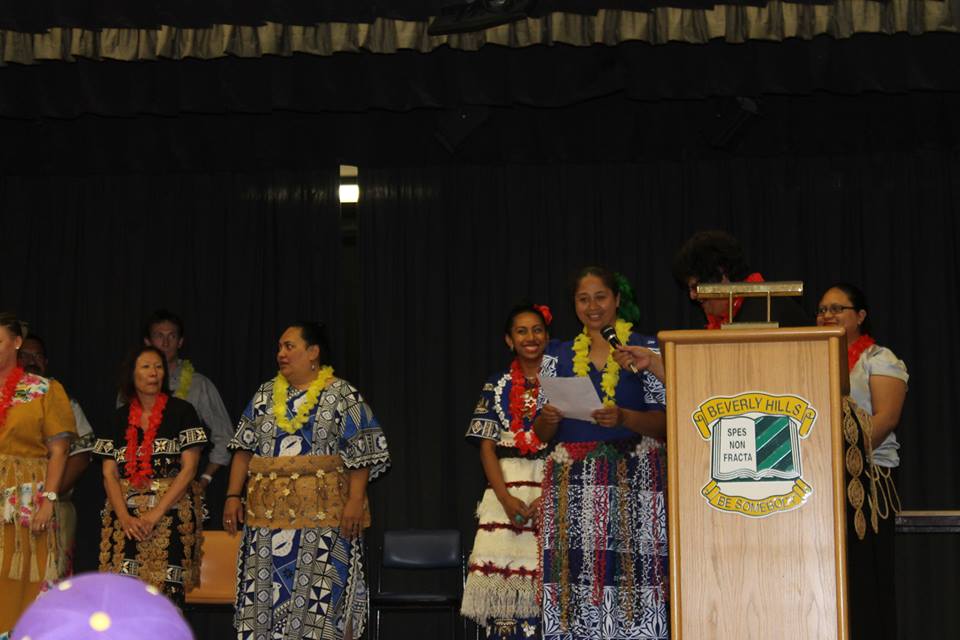
Tongan Language School (Sydney) presentation Day
Reciting the words to Tolifisi at the Tongan Language School (Sydney) presentation day 2013


The school year has ended with our presentation day last saturday. It was a heartwarming day here in Sydney with the words of our guest speaker still resonating with me. The guest speaker Albert Vella who is the President of the NSW Federation of Community Language Schools, talked about the need and importance of speaking Tongan at home.  What is the point of going to Tongan School and learning but not speaking it at home. So that is my new years resolution to be mindful of how much English I actually use and to increase the use of my Tongan at home.

Ko e ha ‘aonga ako lea faka-Tonga kae foki ki api ‘o lea faka-palangi! What is the use of learning Tongan but returning home to speak in English!

As a student and a mother I am eternally grateful to the teachers, and helpers who have dedicated their time to sharing their knowledge to us who aspire to learn and improve our Tongan. My 7yo daughter has relished the experience of the past year so much that she won the most-improved prize award. She has a new found confidence in speaking the language more at home. All I need to do is support that and limit my English so 2014 be good to me and letslearntongan 🙂

‘Oiaue ‘Ana Latu lyrics

'Ana Latu

There are not many children’s lullabies in the Tongan language. This probably has to do with the old traditional attitude that kids should be seen but not heard. ‘Ana Latu is the closest one I could think which is a well known children’s lullaby a lot of mother’s sing to their kids. But if you listen closely to the words, this song is actually a lamenting song about ‘Ana who has departed this world.

Tongan hymn: Te u hiki ‘a hoku le’o lyrics

Beautiful songs need to be shared. Sing-a-long. There is always a lot more appreciation when you know the words and the meaning behind it. Blessed Sunday to you all.

1. Te u hiki ‘a hoku le‘o – I will raise my voice up high
Ke fai ‘atu ‘a e fakamālō – To give you thanks
Lea pē ‘eku hiva’ – The only words of my song are
Mālō Sīsū ‘a ho’o ‘ofa – thank you Jesus for you love/ kindness
2. ‘Alu ai ‘eku manatu – My memories wonders to
Sīsū he ‘aho’ na’a’ke ui ai au – that day that you called me Jesus
Talu ai ‘eku fakapapau – Since then I have decided for Christ
Ko au eni ‘eiki fai mai ha‘o fekau – Here I am Lord give me your bidding
3. Pehe ange mai ‘e au, ‘oku malava – I wish that it be possible
Ka ‘oku ‘ikai ha lea ia ‘e fe‘unga – but there are no words enough
Ke tala atu Sīsū ‘oku hounga – to tell you Jesus I appreciate
‘A e ‘ofa’ kuo u ‘a‘usia – the love I have come to know

{toe hiva mai mei mu’a – repeat from beginning}