Highest Respect for Tongan Women

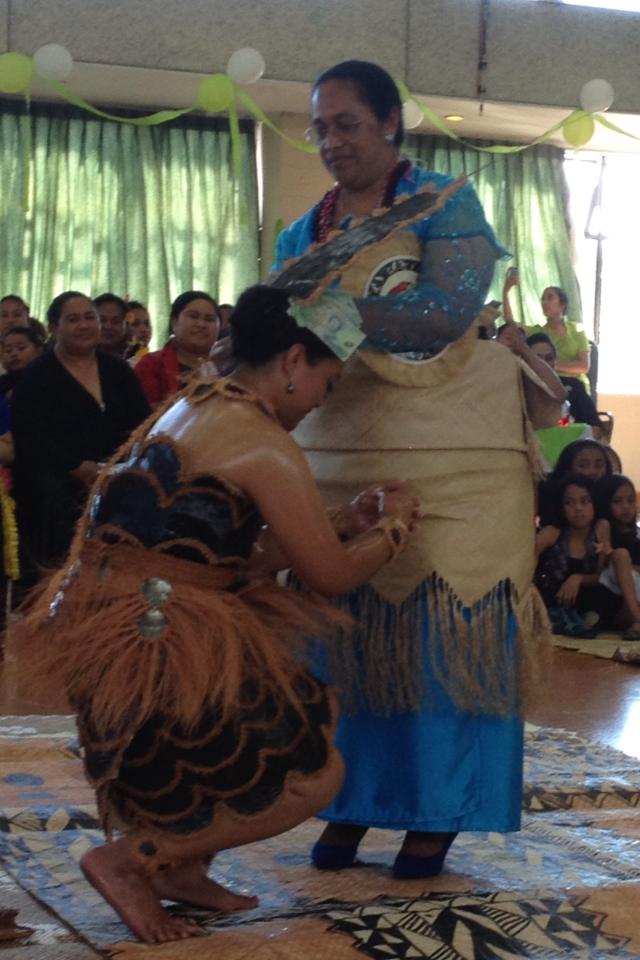
Mehikitanga
Sesika Fifita as mehikitanga takes money gift presented by the dancer.
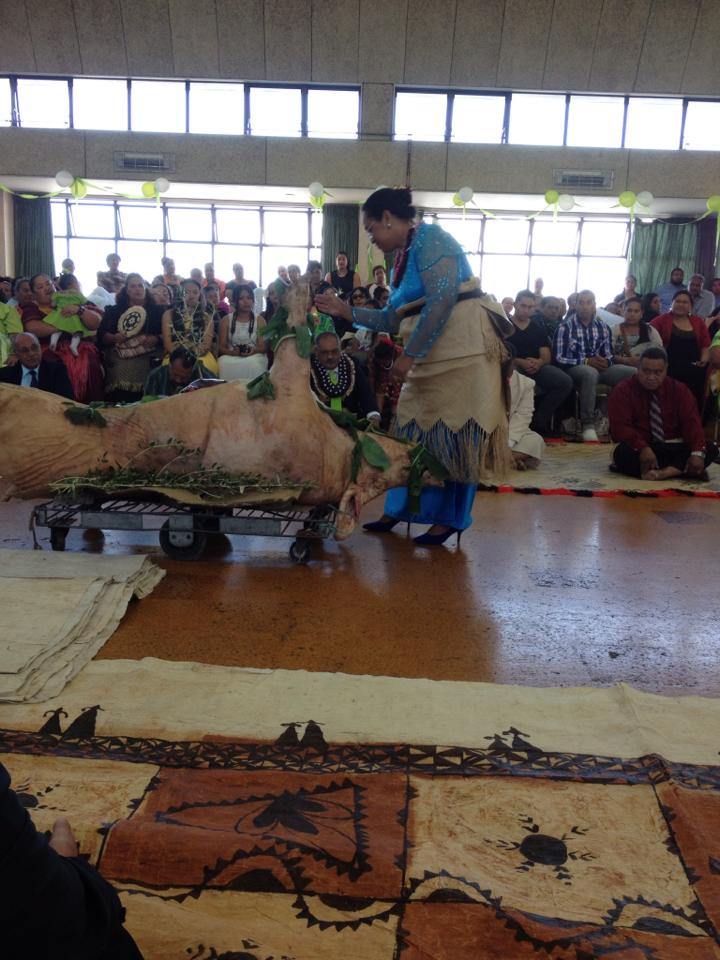
fahufatongia
Mehikitanga accepts her share of food presentation.

In Tongan society, the women or the sisters outrank the males or brothers in the family unit. Accordingly, the language used is one of respect. 

This value and respect the women’ rank is evident in cultural celebrations where the male or brother performs his duty to his paternal aunty and sisters. They are culturally elevated, and honoured fakalāngilangiʻi with presentations of food, gifts of money, fine mats and tapa. The language follows these cultural values where one’s ‘eiki or chiefly side of the family is always referred to with politeness and respect.

We are celebrating International Womenʼs Day with a vocabulary theme of words which describe women and their roles within the family.

  • ta’ahine (n) girl, lady. Also regal word for woman or chiefʼs daughter.
  • finemu’i (n) young girl not yet married
  • ‘ofefine (n) describes daughter of a man.
  • tuofefine (n) describes sister of a male
  • fefine (n) woman, girl (adj) female
  • fafine (n) (adj) plural. girl, women, females
  • faʻē (n) mother
  • mehikitanga (n) fathers sister, paternal aunt
  • fine’eiki (n) lady (polite) word for wife
  • finemotu’a (n) elderly woman, married woman. (derogatory) word for wife
  • kui fefine (n) grandmother

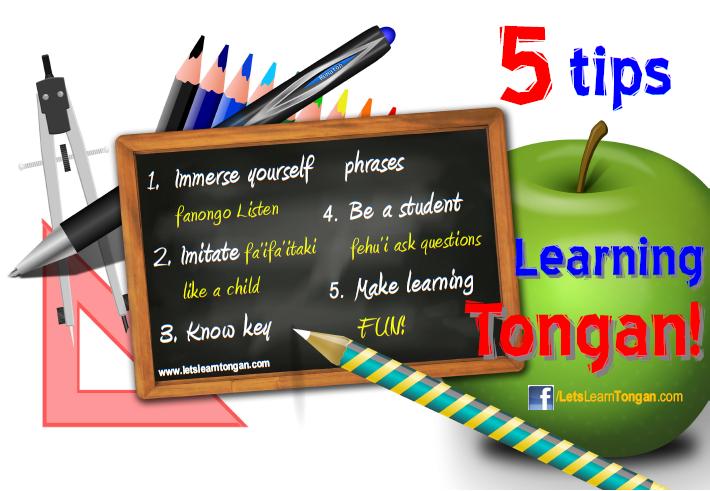
5 Tips learning Tongan for beginners

5 tips learning tongan

Here are 5 tips for those who want to learn Tongan as a foreign language or those wanting to improve their language skills. Learning Tongan does not have to be a chore. Follow these tips, and you will soon discover a beautiful rich language and culture.

  1. Immerse yourself. Ideally spending a good six months in the Kingdom would be the best place to learn Tongan. Otherwise immerse yourself within your local community (family, church, online) and simply LISTEN. Fanongo kihe u ngaahi lea. Listen to the sounds all around. With your family, at church, songs played on radio, programs on tv, or youtube. Listen for the sounds, the tone, the reflections in their voices. 
  2. Imitate. Remember how children first learn to speak. They copy the sounds they hear. Ma-ma, Te-Ti (Mum, Dad) are usually the first words they speak.
  3. Know key phrases. ‘Ikai mahino – I don’t understand. Koe ha ‘ae lea fakaTonga ki he … ? What is the Tongan word for …? Know some key phrases and words will help you learn quicker.
  4. Be a student.  Take notes and ask questions. Be inquisitive like a child. Don’t be afraid to make a mistake. That is all part of the learning process. 
  5. Have FUN. Learning anything new is always easier when there is some fun involved.

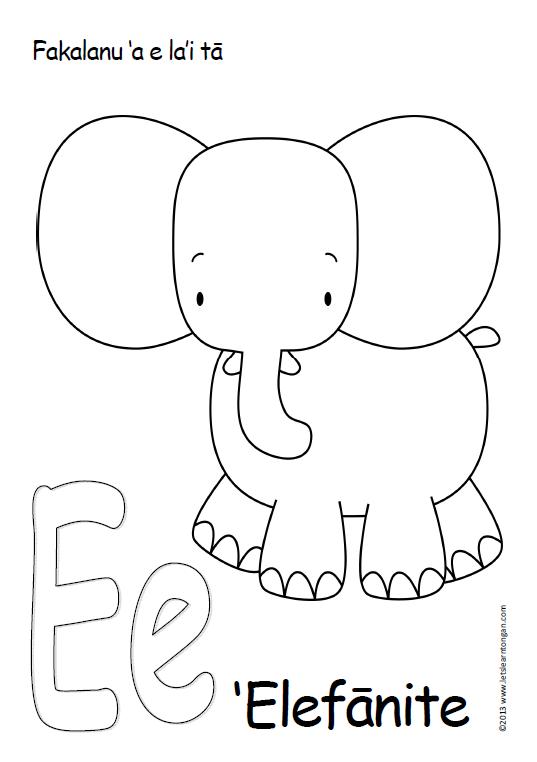
Letter E: colouring in printable

Elephantcolourin

Colour in the picture printable for your kid. To print click on Letter E printable.

Letter E is the first in our series of colouring in pages for kids. These colouring in pages are fun and will help kids

  • recognise the Tongan alphabet
  • begin to associate the alphabet with Tongan words. 
  • begin to pronounce familiar words
  • learn different colour concepts in Tongan

If you found this printable page useful, then please share it with your family and friends. These pages are freely available for educational and personal use. Share your completed work with us on Facebook!

Tama Tonga: A silly song for you

For the past week we have been having a lot of fun with making songs up. Just like ʻWash your face with orange juiceʼ, the lyrics you make up can be crazy and make no sense at all. But every kid will love it and enjoy learning at the same time. This is the second part made up songs for the boys.

Remember that all Tongan words end with vowels. So it is easy to make names, animals and adjectives about personalities rhyme. Below are the lyrics that I made up. Use them, combine them or make up your own.  I would love to read what you guys have come up with.

Tip * Be dramatic, act it out while you sing!

“Tama ko Taniela                    Daniel, the little boy
Hange ha Taikā                       Is like a tiger
ʻOku ne tolofi                           that is stalking
ke kai ʻa e hoosi”                     the horse to eat!

“Tama ko Viliami                     William, the little boy
Ne mau liʻaki                           We left him
Ke vaʻinga ʻi he Sū                  To play at the Zoo
Mo e fanga Kangikalū          With the Kangarooʼ

“Tama ko Sione                        John, the little boy
Hange a Laione                       Is like a Lion,
Faʻa ngungulu                         That always Roars
Pea hola ʻa e pulu                  and scares away the bullʼ

Taʻahine Tonga: a silly song about you

For the past week we have been having a lot of fun with making songs up. My kids love hearing songs Iʻve made about them. This first part is made up songs for the girls.

Iʻve only used the tune of the verses from Peter Combsʼ – Wash your face in orange juice. If you come up with some lyrics for the chorus then let me know. But you could use any tune that you find and like!

Listen to the tune, and make one up for youself, your husband/wife or for your child. I would love to read what you guys have come up with. If you need help let us know.

“Taʻahine ko Lile                    Lile, the little girl
Ko ʻeku siʻi pele                      Is my dearly beloved
Hange ha kiʻi pepe                 She is like a beautiful
Faka-ʻofo-ʻofa”                       butterfly.

“Taʻahine ko Grandma         The lady, Grandma
ʻOku nifo ava                          Is missing some teeth
Lahi ene kaikaila                   She screams too much
Tuku ā ho faʻa ʻita”               Please stop being so mad

“Taʻahine ko Tana                 Tana, the little girl
ʻIkai lava sipela                      Can not spell
Toʻo hake maika                    Grabbed the Mike
ʻO lau Ta-O-Na-A”               And spelt T-O-N-A

Game: how many Tongan words can you make?

Practice the Tongan sound of the vowel A with this Tongan word game!

This is a great game to practice saying the Tongan alphabet and adding to your vocabulary. With this game you will quickly realise that there is only one way to sound out the vowel A.

Say A (ah) as in ʻah-huh, A as in ʻA-llah.

Tongan Alphabet word game

The macron as in Ā makes it a double long vowel. The glottal stop, fakaʻua makes the ʻA shorter and sharper like saying art. Remember Consonants can not stand on its own. They are always followed by a vowel. So using each star, how many Tongan words can you form. Example

  1. Laka – March
  2. Faka – doing
  3. Maka – stone
  4. ʻaka – kick
  5. paka – crab
  6. Ngangana – fall out
  7. Mana – thunder

Ok so how many words did you form? Share your answers so others can add to their vocabulary.

Happy International Tongan language day

I heard on the radio this morning that it was International mother language day. A day that has been celebrated by the UNESCO since 1999. This yearʻs theme is “access to books and digital media in local languages”.  How fitting it is, as the whole premise of this blog is to celebrate and promote the Tongan language.

The importance of written materials in the Tongan language.

The use of the Tongan language in the home environment and in schools will not thrive without supporting the development of written resources like books, textbooks, and written material to support oral activities. Thankfully there are linguist and educators like Dr Tēvita ‘Ō. Ka‘ili and Brian Dawson who have helped immensely in developing the Tongan language through orthography (the spelling system of a language).

If you have any Tongan language books or resources that you have produced or know of any, please contact us as we are happy to promote it here.

To download Tongan language keyboard by Brian Dawson, Click here. It is free. If you find it useful drop Brian a line and tell him so. Even further support his work and donate.

Mālō

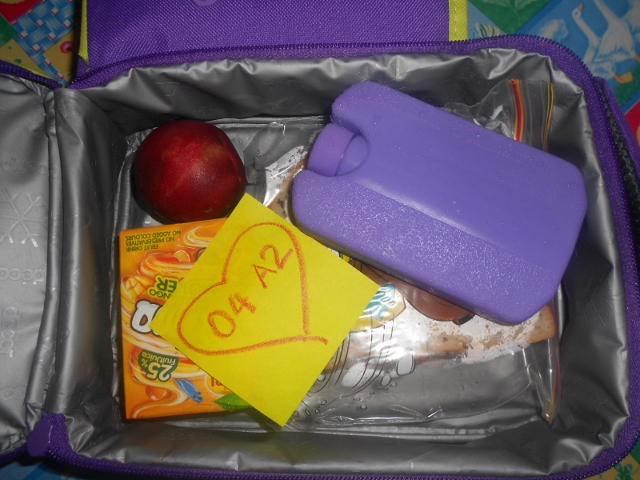
Write a lunch note of ʻofa

Lunch note for my 7yo daughter
Lunch note for my 7 yo daughter

Kidʻs love to receive notes. Even better when it is a surprise. Try writing a note in Tongan and leave it in your kids lunch box if they are old enough to read. As you incorporate more Tongan words into your childrenʼ vocabulary and/ or yourself, they will soon learn to love speaking in Tongan. You could expand this to suit your circumstance. The possibilities are endless.

The picture above was a note I wrote for my eldest daughter. It was her first day back at school today. She started year 2 or second grade. I have noticed she is speaking a lot less Tongan since beginning primary (elementary) school. So I try to incorporate more of the Tongan language where ever I can for her.

I wrote a little note ʻofa atu = love to you. I thought she might have problems reading it but the love heart gave it away. Her reaction after school was worth all the effort

Tu’a ‘ofa atu

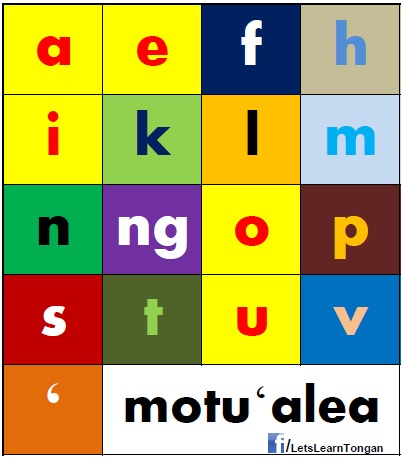
The Tongan Alphabet

The Tongan Alphabet

Motuʼaleá Faka Tonga

  • 17 letters in the Tongan alphabet.
    5 vowels; a-e-i-o-u
  • 12 consonants; f-h-k-l-m-n-ng-p-s-t-v- ‘
  • ‘ Faka’ua (glottal stop) is considered a consonant and the last letter in the Tongan alphabet


Welcome to Letʼs Learn Tongan

Mālō e tau lava, Greetings and WELCOME to “Letʼs Learn Tongan” blog.

My name is Hema and I am a mother and a teacher to my four children. I believe passing on one’s culture is important. I believe that one’s language is the carrier of that culture. Therefore I feel it my duty to teach the Tongan language to my children. My children have quickly learnt their Aa-Ee-Fa-Haʼ and taha-ua-toluʼ but have been reluctant to improve with little  language resources around.

Thus LetʼsLearnTongan.com was born!  I intend this blog to be a great resource for children, parents and educators everywhere, especially those looking for ideas and activities to help make learning of the Tongan language fun and engaging. Follow us on our Facebook page and join in the conversation.

What can you expect to find here?

  • games and ideas
  • songs to listen and repeat
  • hands-on learning activities
  • printables
  • Make arts and crafts projects
  • book reviews, recommendations for our favorite products
  • parenting & teaching tips and ideas
  • plus more!!!

Mālō tuʻa ʻofa atu